
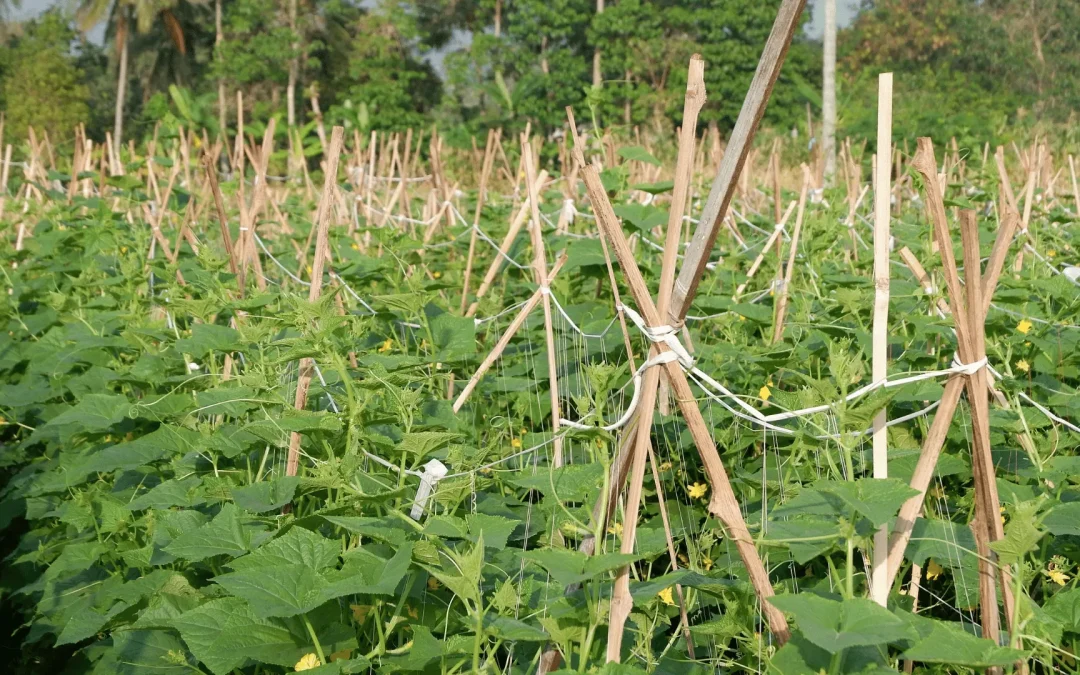
Pull up a stake that has failed after a season or two and look at where it broke. Almost always it snaps within a few centimetres of where the soil line was. The part deep in the ground is often still sound, and the part in the air above looks fine.
That one observation tells you most of what you need to know. Rot is not spread evenly along a stake, so treating the whole thing equally is wasted effort. The battle is fought in a narrow band at ground level. Knowing how to treat wooden stakes to prevent rot really means knowing how to protect that band, and understanding why it is the weak point in the first place.
Why Stakes Rot at Ground Level First
Wood decay fungi need four things at once: wood to feed on, moisture, oxygen, and a reasonable temperature. Deep in the soil, moisture is plentiful but oxygen is scarce, so decay slows down. Well above the soil, there is plenty of oxygen but the wood dries out between rains. Neither zone gives fungi everything they want.
The soil line is where both arrive together. Moisture wicks up from the ground, air reaches the surface freely, and the wood stays damp for long stretches. In a warm, humid climate this zone can stay in the ideal range for fungal growth almost continuously. That is why a stake can look perfectly healthy and still break the moment you lean on it. The damage is concentrated in a few centimetres you cannot see.

Preparing the Stake Before You Treat It
Treatment works far better on a stake that has been prepared properly, and these steps cost nothing but a few minutes.
Start With Dry Wood
Preservatives and coatings penetrate dry wood and sit uselessly on the surface of wet wood. Worse, sealing moisture inside a damp stake creates exactly the conditions decay fungi want. If your stakes have been stored outdoors or feel cool and heavy, let them dry under cover with air circulating around them before you treat anything.
Seal the End Grain
Wood absorbs water through end grain many times faster than through its sides, because you are looking straight down the tubes that once carried sap through the tree.
Both cut ends deserve attention, and the top end especially so, since that is where rain lands and sits. Whatever treatment you choose, apply extra to the ends and let it soak in rather than brushing it on once and moving along.
Shape the Top and the Tip
Cut the top at a slight angle or chamfer the edges so water runs off instead of pooling on a flat cut surface. This small detail makes a real difference over years of rain. Sharpen the buried end to a point, which makes driving easier and reduces the amount of torn, splintered fibre at the tip where water and fungi find easy entry.
Treatment Options That Work
Charring the Buried End
This is the oldest method and still one of the most practical. Scorch the section that will sit in the ground, along with roughly 10 to 15 centimetres above the intended soil line, until the surface is blackened. The charred layer is carbonised wood, and decay fungi find it much harder to digest than untreated timber. It also seals the surface somewhat, slowing moisture uptake.
Char the surface rather than reducing the stake to charcoal. You want a blackened skin, not a thinner stake. Let it cool completely, brush off loose flakes, and the stake is ready. Many people then apply oil over the charred section for additional water resistance. The advantage here is that it costs nothing, adds no chemicals, and is perfectly safe around food crops.
Borate Treatments
Borates, meaning borax and boric acid products, are effective against both decay fungi and wood-boring insects, and they have low toxicity to mammals. They penetrate wood well, especially when the wood is slightly damp.
There is one significant limitation: borates are water soluble. In direct ground contact they gradually leach out, so the protection does not last indefinitely. They work best for stakes used above ground, or in combination with a water-repellent coating over the top that slows the leaching. Follow the product instructions for mixing and application, and allow full drying time before installation.
Copper-Based Preservatives
For stakes going into the ground, copper-based preservatives offer more durable protection. Copper naphthenate is the version most commonly available for brush or soak application rather than industrial pressure treatment.
Soaking is considerably more effective than brushing. If you can stand the butt ends in a container of preservative and let them absorb for several hours, the protection reaches deeper than any surface coating.
Two things to keep in mind. Copper can affect sensitive plants at high concentrations, so think about what you are staking. And always follow the label for handling, protective equipment and drying time, since these are working chemicals rather than garden products.
Oils and Water Repellents
Boiled linseed oil, tung oil, and pine tar mixtures do not kill fungi. What they do is slow water absorption, which matters because decay needs sustained moisture to progress.
Used alone, oil gives modest benefit. Used over a charred section or after a borate treatment, it helps hold the protection in place and keeps the wood drier. That combination tends to outperform either approach by itself. Avoid raw linseed oil for this purpose, as it dries very slowly and can support surface mould while it does.
Bitumen Coating for the Buried Section
Bitumen or asphalt emulsion paint applied to the buried portion creates a physical barrier against soil moisture. It is a common commercial approach for fence posts and works on the same principle for stakes. Extend the coating well above the soil line, because stopping it exactly at ground level leaves the most vulnerable band unprotected.
Buying Stakes Already Treated
Pressure treatment forces preservative deep into the wood under industrial conditions, and nothing you apply with a brush at home reaches that depth. If stakes are going into the ground for years rather than months, buying pre-treated stakes is usually the more sensible route than trying to replicate the process yourself.

What Not to Use
Some traditional methods circulate widely and should be avoided.
Used motor oil is the most common of these. It contains heavy metals and combustion residues, contaminates the soil around every stake, and is illegal to dispose of this way in many places. It also provides much less protection than people assume.
Creosote is genuinely effective, which is why it was used for so long, but it is restricted or banned for consumer use in many countries because of health risks. Where it remains available it is limited to specific industrial applications.
Soaking stakes in diesel or kerosene offers little lasting protection, contaminates soil, and creates a fire hazard during storage. The smell alone makes it unsuitable anywhere near a garden.
The Installation Detail That Beats Any Treatment
Decay needs sustained moisture, so the fastest way to extend a stake’s life is to keep that ground-line zone draining freely. Backfilling the hole with coarse gravel rather than packing soil tightly around the stake lets water move away instead of sitting against the wood.
Setting stakes in concrete is a common mistake in this context. Unless the concrete is shaped to shed water away from the wood, the collar traps moisture against the stake and holds it there. Posts set carelessly in concrete frequently rot faster than posts set in gravel.
For anything you want to last many years, consider keeping the wood out of soil contact altogether. A metal post anchor or driven spike holds the stake above ground level, which removes the ground-line problem entirely. The stake then only has to resist rain, which is a far easier job.
Storage matters too. Stakes stacked on bare ground absorb moisture from below and often begin decaying before they are ever installed. Keep them off the ground and under cover.
Choosing Wood That Resists Rot From the Start
Not all timber starts from the same place. Heartwood, the darker wood from the centre of the tree, is considerably more decay resistant than sapwood from the outer layers. Sapwood also absorbs preservative better, which partly compensates, but untreated sapwood in ground contact fails quickly.
Species matters enormously. Dense tropical hardwoods such as ironwood, teak and merbau contain natural extractives that resist decay for years without any treatment. Softer, faster-grown timbers like pine and light plantation species have little natural resistance and depend entirely on treatment.
If your application is demanding and the stakes need to last, starting with a durable species and treating it is a very different proposition from treating a soft species and hoping.
If the Stakes Are Going Near Food Crops
Treatment choice narrows when you are staking tomatoes, beans or anything else you intend to eat. Charring is the safest option here, since it adds nothing to the soil. Borate treatments are generally considered low risk, though the leaching issue applies. Boiled linseed oil is widely used in food gardens.
Copper preservatives and anything industrial deserve more caution, and anyone uncertain should check local guidance for their specific product rather than assuming. For vegetable garden stakes that get pulled and replaced every season or two anyway, charring plus an oil coat is usually the sensible balance between effort, cost and safety.
What Actually Decides How Long a Stake Lasts
So, how to treat wooden stakes to prevent rot? The honest answer is that no treatment makes wood permanent, and three things working together matter far more than any single product.
Start with the right wood, heartwood of a reasonably durable species rather than soft sapwood. Protect the ground-line band specifically, by charring, coating, or soaking it, and extend that protection well above and below where the soil will sit. Then install it so water drains away from the wood instead of pooling against it.
Of those three, drainage is the one people most often overlook and the one that produces the biggest difference. A carefully treated stake packed into wet clay will fail sooner than an untreated durable hardwood stake set in gravel.
Get all three right and a wooden stake will outlast most people’s expectations. Get the first two right and ignore the third, and you will be back at the same stake next season, wondering why it snapped at exactly the point where the soil used to be.
For more information about Wooden Stake please contact: Whatsapp/Mobile Phone: +62 811 1721 338 (Ms. Ais) or Email : info@urbanplastic.id.